
Instagram algorithm continues to shape how content is discovered, prioritised, and interacted with on the platform, making it an important topic for brands, creators, and businesses heading into 2026. As competition for attention grows and user behaviour evolves, understanding how visibility may be influenced by signals such as engagement, relevance, and content format can help guide more informed content decisions.
Rather than relying on assumptions or outdated tactics, exploring how the platform’s systems may operate allows marketers to better align their strategies with how audiences are likely to consume content. As Instagram introduces new features and refines existing ones, the way posts reach followers and non-followers alike may shift over time.
This creates both challenges and opportunities for those aiming to maintain reach, engagement, and consistency. By examining potential patterns behind content distribution and exploring adaptive approaches, businesses and creators can position themselves to respond more effectively to change, while focusing on sustainable growth rather than short-term hacks.
What Is the Instagram Algorithm?
The Instagram algorithm refers to the set of systems and signals Instagram uses to organise, prioritise, and display content across different areas of the platform, such as the Feed, Stories, Reels, and Explore page.
Rather than showing posts in a simple chronological order, the algorithm evaluates various factors—such as user interactions, content relevance, and timeliness—to decide which content is more likely to be of interest to each individual user.
Why the Instagram Algorithm Matters for Businesses and Creators?
The Instagram algorithm plays an important role in shaping how content is distributed and discovered across the platform for both businesses and creators. While visibility is often a primary concern, the algorithm also influences how audiences interact with content and form ongoing relationships with brands or profiles. Understanding why the algorithm matters helps frame more strategic, sustainable approaches to growth rather than relying on short-term tactics.
- Content Visibility and Reach
The algorithm influences which posts are shown more frequently in users’ Feeds, Stories, Reels, and Explore pages. Higher visibility can increase the chances of content being seen by both existing followers and new audiences. - Audience Relevance and Targeting
By ranking content based on user behaviour and interests, the algorithm helps match posts with people who are more likely to find them relevant. This can support more meaningful Instagram engagement rather than broad, untargeted exposure. - Engagement and Interaction Quality
The way users interact with content—such as saving, sharing, or watching—can affect how future posts are ranked. This encourages businesses and creators to focus on content that resonates, not just content that attracts quick reactions. - Growth Opportunities Over Time
Consistent alignment with algorithm signals may support gradual account growth. Instead of relying solely on viral moments, creators and brands can build momentum through steady performance. - Content Strategy and Format Choices
Different content formats are evaluated differently by the algorithm. Understanding this can help guide decisions around using Instagram Reels, Stories, carousels, or static posts more intentionally. - Competitive Positioning
As more accounts compete for attention, the algorithm acts as a filter that determines which content gains prominence. Awareness of how it works can help businesses and creators position their content more effectively within their niche.
How the Instagram Algorithm Works
The Instagram algorithm works by using a range of signals to determine which content is most relevant to each individual user across different areas of the platform. These signals may include user interactions, content type, timeliness, and past behaviour, helping Instagram prioritise posts that align with personal interests
The Old Instagram Algorithm
The earlier versions of the Instagram algorithm were often understood as being heavily influenced by recency and visible engagement metrics, such as likes and comments. Content was more likely to appear higher in users’ feeds if it received quick interactions shortly after posting. Posting time, frequency, and chronological order were commonly seen as strong factors, especially in the Feed and Stories.
During this period, growth strategies tended to focus on posting at “optimal times,” using large sets of hashtags, and driving immediate engagement to signal relevance. While personalisation existed, the algorithm appeared to rely more on surface-level signals and short-term performance rather than deeper content interaction.
The New Instagram Algorithm
Based on Instagram policy and official creator documentation, newer iterations of the Instagram algorithm place greater focus on personalised ranking and user behaviour signals. Instead of relying primarily on how recent a post is or how many likes it receives quickly, the system considers signals such as watch time, saves, shares, profile visits, and a user’s previous interactions with similar content or creators.
Instagram also applies separate ranking systems for different surfaces, including Feed, Stories, Reels, and Explore, each shaped by how people typically engage with those formats. As a result, content relevance, consistency, and sustained audience interest are more likely to influence visibility over time rather than immediate engagement alone.
Instagram Algorithm by Content Type
The Instagram algorithm does not apply the same ranking logic to every type of content, as users tend to interact differently depending on the format they are viewing. Each content surface is shaped by user behaviour, intent, and interaction patterns, which influences how posts are prioritised and distributed. Understanding these differences can help creators and businesses align their content more closely with how the platform surfaces posts.
- Instagram Feed Algorithm
The Feed algorithm focuses on relevance and relationship signals, such as past interactions, content interests, and post recency. Posts are more likely to appear when users have previously engaged with similar content or accounts. - Instagram Stories Algorithm
Stories are ranked based on frequency of interaction and viewing habits, including replies, reactions, and how often users tap through or exit Stories. Accounts that users regularly interact with tend to appear earlier in the Stories tray. - Instagram Reels Algorithm
The Reels algorithm places strong emphasis on watch time, completion rate, and replays, along with shares and saves. Reels are often surfaced to new audiences based on content performance rather than follower relationships alone. - Instagram Explore Algorithm
Explore prioritises content discovery and interest matching, using signals from posts users have previously liked, saved, or interacted with. This surface is designed to introduce users to new creators and topics aligned with their interests.
| Content Type | Primary Algorithm Focus | Key Signals Considered | Primary Goal |
| Feed Posts | Feed content is ranked based on how relevant a post may be to a user, taking into account their past behaviour and interactions. | Likes, comments, saves, shares, time spent on post, relationship with the account | Show relevant content from accounts users care about |
| Stories | Stories are prioritised based on the strength of the relationship between the viewer and the creator. | Story views, replies, reactions, frequency of interaction | Surface updates from close or frequently engaged accounts |
| Reels | Reels are evaluated for entertainment value and potential interest beyond existing followers. | Watch time, completion rate, replays, shares, audio usage | Discover new content and creators |
| Explore Page | Explore content is selected based on predicted interest using similar content users have engaged with before. | Past engagement, content popularity, topic relevance | Help users discover new accounts and topics |
| Instagram Search | Search results are ranked using keywords, account relevance, and user activity. | Username, bio keywords, captions, hashtags, previous searches | Deliver relevant results based on intent |
Also read : How to Master Instagram Management and Its Tasks
Common Myths About the Instagram Algorithm
The Instagram algorithm is often surrounded by assumptions that can lead to confusion and ineffective strategies. Many of these beliefs oversimplify how the platform ranks content or misunderstand how Instagram applies its policies and ranking signals. Clarifying these myths can help creators and businesses focus on realistic, sustainable actions rather than chasing tactics that may no longer be relevant.
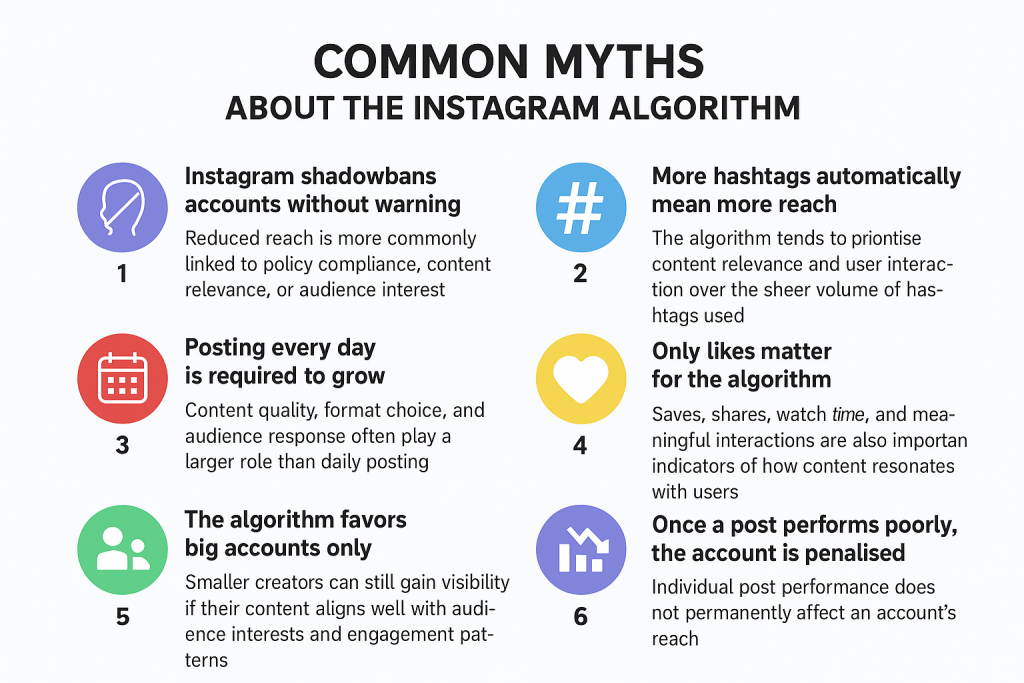
- Instagram Shadowbans Accounts Without Warning
While content visibility can fluctuate, Instagram has stated that reduced reach is more commonly linked to policy compliance, content relevance, or audience interest rather than hidden or unexplained penalties. - More Hashtags Automatically Mean More Reach
Using a large number of Instagram hashtags does not guarantee better performance. The algorithm tends to prioritise content relevance and user interaction over the sheer volume of hashtags used. - Posting Every Day Is Required to Grow
Consistency can be helpful, but posting frequency alone does not determine success. Content quality, format choice, and audience response often play a larger role than daily posting. - Only Likes Matter for the Algorithm
Likes are just one of many signals. Saves, shares, watch time, and meaningful interactions are also important indicators of how content resonates with users. - The Algorithm Favors Big Accounts Only
While established accounts may have advantages, smaller creators can still gain visibility if their content aligns well with audience interests and engagement patterns. - Once a Post Performs Poorly, the Account Is Penalised
Individual post performance does not permanently affect an account’s reach. Each piece of content is evaluated independently based on relevance and interaction signals.
Best Practices to Work With the Instagram Algorithm
Working with the Instagram algorithm often involves aligning content strategies with how users naturally interact on the platform. Rather than trying to “outsmart” the system, many successful accounts focus on consistency, relevance, and audience behaviour. The following best practices highlight practical ways to adapt content and posting habits in response to how the algorithm tends to prioritise content.
- Focus on Content Relevance
The algorithm tends to prioritise content that matches user interests and past behaviour. Creating posts that address your audience’s needs, questions, or preferences may increase the likelihood of meaningful interactions. - Encourage Meaningful Engagement
Interactions such as saves, shares, comments, and watch time are often stronger signals than likes alone. Content that sparks conversation or provides value may perform more consistently over time. - Use the Right Content Format
Feed posts, Stories, Reels, and Explore are ranked differently. Choosing formats that align with your content goals and audience behaviour can support better visibility. - Post Consistently, Not Excessively
Maintaining a steady posting schedule can help build familiarity with your audience. Posting too frequently without considering quality may not produce the desired results. - Optimise Captions and Visuals
Clear visuals and engaging captions can encourage users to spend more time on a post. This interaction can signal interest and relevance to the algorithm. - Pay Attention to Timing
While timing is not the only factor, posting when your audience is more active may help early interactions. This can support initial distribution without relying solely on it. - Review Insights and Performance Data
Instagram Insights can provide context on what content resonates with your audience. Using this data may help refine future posts and strategies.
How a Social Media VA Can Help You Beat the Instagram Algorithm
A Social Media VA can support businesses and creators by handling the day-to-day tasks required to stay aligned with how the Instagram algorithm operates, including content scheduling, engagement management, and performance tracking.
By consistently analysing insights and adapting content based on audience behaviour, a VA helps improve visibility and interaction without relying on short-term tactics. For brands looking to scale efficiently, especially those working with VA social Media in Australia, partnering with a service like Ironbrij can provide structured, data-informed support that allows you to focus on growth while your Instagram presence is managed strategically.
FAQ
- How important is engagement for the Instagram algorithm?
Engagement signals like likes, comments, shares, and saves can influence how widely content is shown, particularly when interactions happen shortly after posting. - Does posting time affect the Instagram algorithm?
Posting when followers are active may help content gain early interactions, which can support better visibility in feeds. - Do hashtags still work with the Instagram algorithm? Hashtags can still help provide context for content, though their impact may depend on relevance, competition, and how users interact with the post
- Can Instagram shadowban an account?
Some accounts report reduced visibility after policy violations or spam-like behaviour, though Instagram does not officially label this as a “shadowban.”